Key Takeaways
- When assessing a Rheumatology EHR system, consider factors beyond the initial cost.
- The true expense of a low-cost EHR often manifests in inefficiencies, staff burnout, compliance challenges, and diminished patient satisfaction.
- A comprehensive, scalable EHR may demand a higher upfront investment, but it ultimately enhances workflows, elevates patient care, and prevents a cycle of unexpected add-ons and fees.
Let’s delve into the actual costs associated with adopting a system that merely appears to save you money.
Table of Contents
The True Cost of Implementation
Implementation is often where the first unexpected costs arise. With many low-cost EHRs, onboarding is typically minimal, offering little guidance beyond the basics. This results in:
- Insufficient training that leaves staff uncertain about how to utilize the system effectively
- Increased time spent troubleshooting instead of focusing on patient care
- Additional fees for “premium” training sessions or extended support
For Rheumatology practices, this can be particularly disruptive. Picture your team struggling to document follow-ups for joint injections or medication adjustments without the appropriate templates. Instead of concentrating on patient care, they waste precious hours trying to adapt a generic system to their needs.
Workflow Disruption: The Hidden Costs
- Documentation delays: Rheumatology providers often require specialty-specific templates for treatment plans, lab results, or medication management. Generic systems compel providers into labor-intensive manual processes.
- Inefficient billing processes: Gaps in revenue cycle management, such as missed codes for biologic therapies, can lead to claim denials.
- Staff fatigue: Excessive clicks, repetitive data entry, and disrupted workflows consume clinical time and contribute to staff turnover.
Every minute lost navigating a poorly designed system is a minute not spent with patients. Those “lost minutes” directly correlate to lost revenue and a decline in the quality of care provided.
The Hidden Costs: Add-Ons and Fees
- Advanced reporting or analytics (e.g., to monitor treatment outcomes)
- Customization of templates and forms for Rheumatology-specific procedures
- Secure messaging or patient portal access
- E-prescribing capabilities, particularly for controlled substances
What initially appeared to be an affordable EHR for Rheumatology practices can quickly escalate into a system that costs more than premium solutions—without providing equivalent value.
Rheumatology-Cloud’s comprehensive EHR system addresses these challenges by offering reporting, e-prescribing, customization, and patient portal access from the outset.
Telehealth and Fragmented Charges
In today’s healthcare landscape, telehealth is essential for ensuring patient access. However, with a low-cost EHR, you may find that telehealth capabilities are offered as costly add-ons or, worse, are entirely unavailable.
For Rheumatology clinics, managing multiple systems for follow-ups, consultations, and routine patient care can be a daunting task. This fragmentation not only leads to increased subscription costs but also heightens compliance risks and hampers overall efficiency.
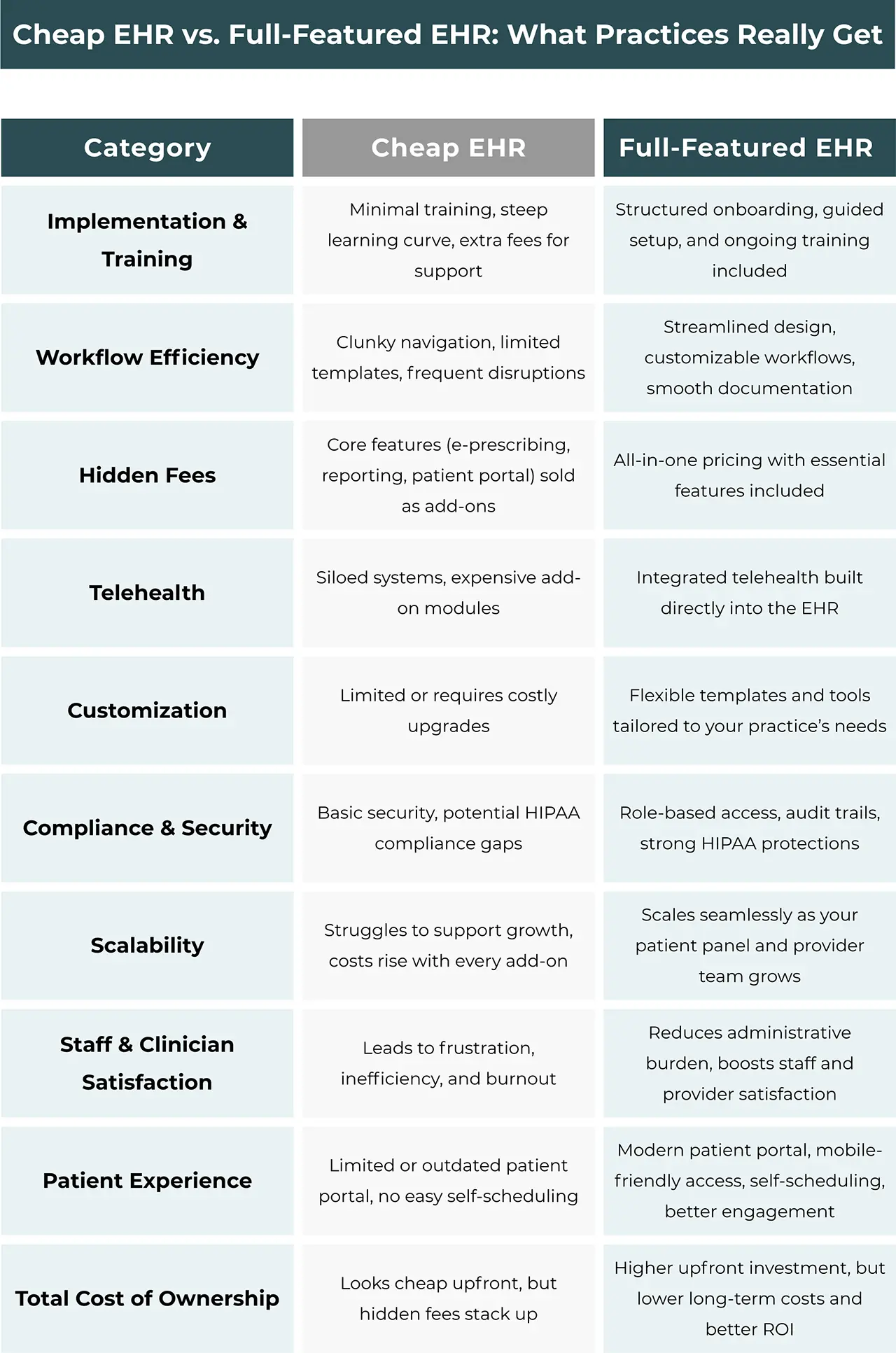
How Much Does a Rheumatology EHR Really Cost?
Determining the cost of a Rheumatology EHR involves more than just the initial price tag; it requires a comprehensive understanding of the total cost of ownership (TCO):
- Direct costs: Licensing fees, setup expenses, ongoing support, and training
- Indirect costs: Decreased staff productivity, patient no-shows, billing inaccuracies, and turnover due to clinician burnout
- Growth costs: Additional fees for each new provider, feature, or integration as your practice expands
What a Comprehensive EHR Delivers From Day One
In contrast to limited systems that require you to navigate challenges independently, a comprehensive Rheumatology EHR is designed to support your success from the outset. This includes:
- Free implementation support – Tailored Rheumatology workflows, templates, and settings configured accurately from day one. Understanding what successful implementation entails is crucial in selecting the right EHR vendor.
- Comprehensive training – Proper training can lead to an impressive 83% satisfaction rate among end-users, compared to just 36% without it.
- Data migration included – Seamless transfer of patient records, demographics, and historical notes without incurring additional costs.
- Practice-specific customization – Rheumatology-focused templates for various care types streamline processes and enhance efficiency.
- Ongoing support at no extra charge – Responsive customer service and continuous training keep your staff well-informed and capable.
The distinction is clear: rather than being charged for basic services, you gain a partner dedicated to your long-term success.
Choosing Wisely: Invest in Long-Term Value
Instead of simply asking, “Is there a free EHR available?”, consider the following:
- Will this system scale as my Rheumatology practice expands?
- Does it include specialty-specific tools tailored for Rheumatology care?
- Are telehealth, patient engagement, and reporting features integrated or offered separately?
- What level of support and training is provided?
Investing in a robust EHR specifically designed for Rheumatology practices is more about value than mere cost. The right solution fosters your growth, enhances clinician satisfaction, and ensures that patients receive the quality care they deserve.